
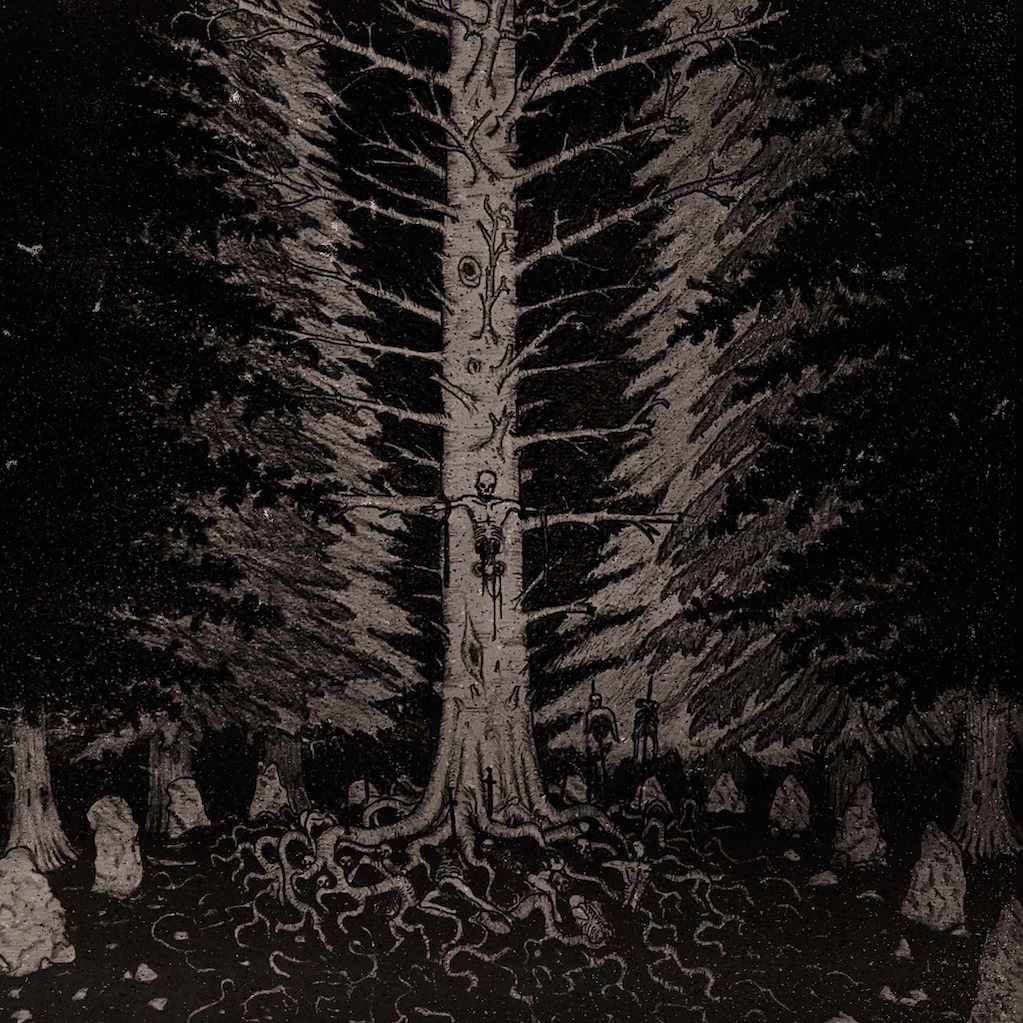
There is a genuine allure toward the wilds and lore of Switzerland’s most forbidden parts, and those elements fit the uncompromisingly harsh aural breed favored by one-man blackened beast ASPAARN, who recently unleashed the next venture into the stormy and battle-torn ages of his homeland titled Oblations in Atrocity. This new chapter pursues the path initiated on previous efforts, where the mystery surrounding bygone eras obscured by time and hostile climates is realized within abrasive soundscapes, and it strives for greater levels of immersion through their expanding compositional dynamics. Savagery is key when navigating the many perilous designs of Oblations in Atrocity, and only the ruthless survive as it carves out an offering that pays homage to second wave legends while also satiating bloodthirsty gods.
A strong atmospheric focus is recognized at the onset, with ancient ruinous auras introduced by synth tones and the prevailing lo-fi grimness, and this production has advanced over past releases to preserve a primal essence while also allowing for greater audibility of the arrangements. The distant and murky drumwork contains many detectable nuances, and a certain clarity is held especially in the riffing, which combines tremolo melodies and masses with other noted shapes to cast a myriad of forms within each track. Sometimes these progress or shift in ways that suggest wandering unpredictably through vast uncharted lands at night, but points of reference and structure are found in certain recurring areas, and they often possess distinct qualities in melody and rhythm that embed themselves in memory before a disorienting return to madness. Multiple instances are noted during “Memories in Suffering,” where a pointed riff stride and dissonant pulsations emerge around chaotic strings of tremolo melody, and it all exhibits a concurrently unsettling, unhinged, and meticulous nature in the songcraft.
The hellish potential of this sound is also amplified vocally, with rasps projected like the curses of a feral abomination from some impenetrable and otherworldly pit, and the monstrous bellows echoed initially on “Silence of the Gods” demonstrate variations to parallel the magnitude of those menacing aural depths. Such dimensions materialize further through riffs layered in a dark and dissonant potency, and melodic intricacies are found charging a frantic and technical prowess within their currents. “Duty in Hecatomb” is marked by another infectious riff amid its swarm of chord and tremolo formulas, and while the details of leadwork appearing throughout are sometimes difficult to fully capture, they capably imbue the arrangements with a vital edge that becomes distinguished here in a prominent atmospheric summoning. Its immersive quality escalates as the solo is intertwined with clean string sections and other synth notes creeping subtly in the mix, and this multi-leveled composition reflects a cooperation between dynamism and primitivism that produces alluring effects. Ancient scenes are evoked with a saturating cold and gloom, and these impressions expand on the last track when ambient vocal tones produce a majesty to match the melancholy, which ultimately achieves closure with an epic and lasting imprint.
Inhospitable settings are further manifested through words of power that convey the exhaustion and struggle of the times, with verses on the opening vision portrayed like a prayer to some deity, and they reveal aims of seeking illumination and protection while on the path to secure a legacy. The brutality of life here is found in “The sacred bond between flesh and steel” on “Memories in Suffering,” along with the dark psychology related to factors like isolation, and layers of anguish extend to the “Perpetual circumvolution of subconscious pain constructs” on “Silence of the Gods.” Nihilistic and existential themes emerge when addressing free will or fate, and hope remains despite futile outlooks and prayers that are left unanswered during “Duty in Hecatomb.” Blood is required by whatever gods may exist among its inhabitants, and different lines effectively portray the perspectives of both those offering themselves for sacrifice and the others carrying it out.
The atmospheric nature is described at points throughout, including the “Vastness howling its hostility” on “Boundless Hunger,” but there is also a nonphysical counterpart to these lands, where “Feral predators stalking from beyond” pale in comparison to a greater horror rising from below. Its capacity for bringing oblivion is measured in the “Sorrow seeded across the universe” and “Disgust lingering through aeons,” which seems to reflect the overall human sentiments of the time, and “All Reaching Misery” sees veils torn as “Certainties started crumbling” alongside a final conflict to highlight the interactivity between domination and submission. A wealth of well-constructed lines and material to contemplate are found running through the verses, and they provide a dynamic context for the musical realm that deepens and completes the total experience.
The sacrifices offered on Oblations in Atrocity have been well-received, and their signs affirm ASPAARN is traveling along an immensely enchanting course, with the substance from past glories echoed and evolving in the detail of its aural pieces. A fervent devotion to the grimmest arts is likely necessary to appreciate the primitive nature of this sound, but there are many notable elemental conjurings to encounter among its untamed realms, and for me it was a welcome challenge to dissect and navigate across all the dense maddening structures woven throughout. This work stands as a worthy entry into ASPAARN’s mythos, and its spirit drives an instinctive wonder for what remnants might be unearthed during the next formidable journey.
 themisanthreport.com