
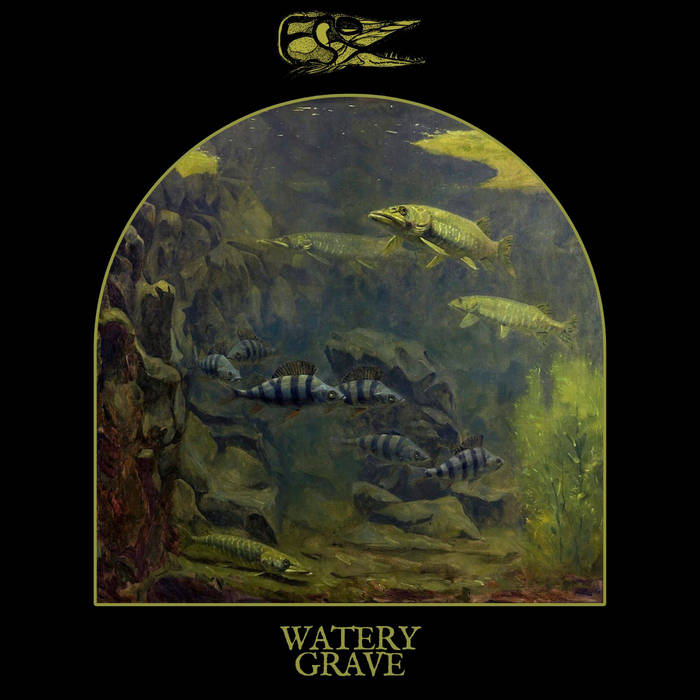
Dark musical expeditions can easily descend into an array of abyssal domains, and one Italian entity has claimed the aquatic variety as its specialty. After an initial submersion in those soundscapes through the debut EP titled …And the Ocean will Swallow Us All, the blackened atmospheric tides of ESOX have reached new trenches within the full-length depths of Watery Grave. Mastermind F.S.’s academic pursuits in the field of Biology along with other personal ordeals bring a genuine and learned perspective to these compositions, where the sense of wonder expressed by its instrumental vastness is matched also with harsher currents, and these cohabitating forms mark a potent continuation of ESOX’s distinct evolutionary path.
The sound of rain falling among clean and acoustic lines introduces a dreary natural setting that is paralleled by the black metal arrangements, which possess lo fi qualities favorable to a dejected spirit sinking through these tracks, but atmosphere is the prominent feature as meanderings across instrumental passages are extensively developed. The combinations of clean melodic leads and acoustic rhythms with various symphonic elements form deep alluring textures, with a diversity that includes areas of psychedelic prog on “The Unbearable Cry of the Sea” and a techno-infused charge during “The River Nihilist,” and coastal visions are invoked by seagull and wave crashing sounds at points throughout. The oceanic presence is further observed in effects gleaming with its splendor on “Walden,” and here the expansive capacity is exemplified as synths continue building around a neofolk acoustic line. Some acoustic and piano sections have a meditative or hypnotic impact, and they support immersive aspects that are heightened when spoken narrations arise like flashbacks toward better times from the past.
Ambient features also seep in and enhance the harsher compositional side, like in the funereal touch from organ keys matched to an abyssal riffing depth on “Livyatan Melvillei,” and the dissonance here turns utterly wretched at a point where riffage creeps alongside tortured vocal projections. Sung parts also arise for a woeful variation to that sinister persona, and they often reflect a tranced-out state during the atmospheric sections. That entrancement extends to tremolo riffs and melodies with a gloom which is elaborated on through leadwork, and a spectrum opens in solos that often begin melancholic and then soar into euphoric majesty. One issue with some leads is an overuse of predictable ascending or descending triple-noted patterns, and a similar instance is found in a riff ascent on “Esox lucius,” which is followed by repetitive string hits that are likely aimed toward culminating the arrangement, but without quite reaching that epic mark.
Many lead and riff harmonizations are successful in their energetic gatherings though, and those few perceived monotonies are effectively countered by blasts into complete technical frenzy. Intricate methods are likewise laced among the masses, and one highlight occurs when cold arpeggiated notes emerge within the concentrated darkness after a spoken part on “The River Nihilist.” Its malicious force strikes highly on point, and the potency is sustained across further melodic and lead triumphs, which merge with the riffing and vocal harshness to achieve a true zenith until acoustics and rain arrive at the lowest inhospitable destination.
The main concept within this work involves a man who decides to carry out his own demise by drowning, and various themes are contemplated during the descent to his grave beneath the waves. The first track details this act, with poetic observations of nature like “Sunset bleeds gold on the horizon” found also alongside a curious Norse mythological reference in the “Freezing Gjoll,” and depressive states manifest in forms likened to “The darkest waters.” The lack of hope or happiness described here is matched with nihilistic views toward a life that will ultimately be forgotten after its end, and they relate to the abandonment of God and “No Heaven for our souls” following on “Livyatan Melvillei.” The vicious instincts of sea creatures from a quoted passage are paralleled to human savagery through depictions of domains “Scarred by the failures of Man,” and similarly, there are scenes in nature that are used metaphorically to convey certain ordeals, like in the “Clouds of melancholia” on “Esox Lucius” intended to shield against a source of pain symbolized by the Sun. Liquor and the water in natural bodies are both liquids used also to dull the anguish, which is further detailed through quoted passages on “Walden” about realizing that life was not actually lived, and “The River Nihilist” continues with yearning for better days that never come. An inherent contempt is perceived around this despair, and the dark potency from those tones together becomes even more impactful when joined to the other contemplative points raised throughout.
The waves of Watery Grave have beckoned us into the depths and vision of ESOX, which easily captivates through a meticulous interplay between influences taken from various genres, and the spirit of this project is further distinguished through its atmospheric and narrational passages. These combined with some highly evocative soloing and melodic elements create a majesty reflective of our natural landscapes, and some sections might even be too majestic considering the main theme. That theme is realized by an alluring darkness conjured in riffs that would be preferably more prominent and developed further on the next exploration. Their raw blackened power seems mainly accentuated among the emphasis toward atmosphere and diverse musicality here, making Watery Grave a suitable piece when contemplative moods arise, and with an overall substance well worth a committed dive for those open to the outer regions of metal.
 themisanthreport.com